
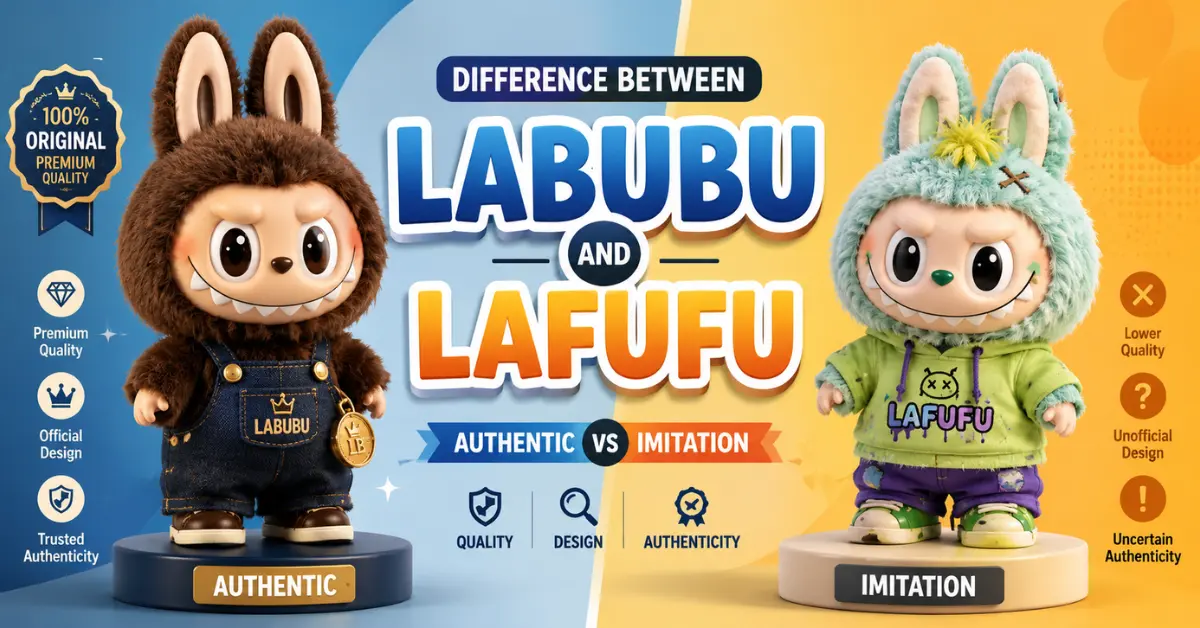
The difference between Labubu and Lafufu is simple but important. Labubu is the authentic collectible character made popular through POP MART’s THE MONSTERS series, while Lafufu is a common nickname people use for fake or counterfeit Labubu dolls. In other words, Lafufu is not an official character or an official POP MART release.
This topic matters because Labubu dolls have become highly popular among collectors, fashion fans, and toy lovers. Their unique “ugly-cute” design, pointed ears, mischievous smile, and collectible blind-box style have made them a major trend. POP MART describes Labubu as one of the most prominent characters in THE MONSTERS collection, known for its high pointed ears and serrated teeth.
But with popularity comes imitation. Because real Labubu dolls can sell out quickly or become expensive on resale markets, fake versions have appeared online and in some marketplaces. These fake versions are often called Lafufu. Some may look close to the real doll at first glance, but they usually have lower-quality materials, wrong details, poor packaging, and missing authenticity features.
This guide explains everything in a simple way: what Labubu is, what Lafufu means, how to spot a fake, how to check packaging, how many teeth a real Labubu should have, why QR codes matter, and what to do if you already bought a suspicious doll.
Quick Answer: What Is the Difference Between Labubu and Lafufu?
The biggest difference is authenticity. Labubu is real. Lafufu is fake.
A real Labubu is an official POP MART collectible. It usually comes with proper packaging, official branding, correct design details, a verification sticker or QR code, quality stitching, and accurate character features.
A Lafufu is a counterfeit version made to look like Labubu. It may copy the shape, color, packaging, and style of the original, but it is not produced or approved by POP MART. Lafufus often have cheaper materials, poor stitching, wrong teeth count, strange face paint, incorrect ears, weak tags, or suspicious QR codes.
For collectors, the difference matters because a real Labubu has collectible value, while a Lafufu does not have the same authenticity, resale value, or brand trust. For parents, the difference matters even more because product safety agencies have warned that fake Labubu dolls can pose choking risks to young children. The U.S. Consumer Product Safety Commission warned in August 2025 that fake Labubu plush dolls, sometimes called Lafufu, may pose a serious choking and death risk to young children.
What Is Labubu?
Labubu is a collectible character from THE MONSTERS series, connected with POP MART’s designer toy culture. The character is usually recognized by its pointed ears, wide grin, small monster-like face, and sharp little teeth. It has a playful look that feels cute and creepy at the same time, which is one reason collectors love it.
Labubu is not just a random plush toy. It is part of a collectible culture where fans buy blind boxes, limited designs, seasonal releases, and special collaborations. Many collectors enjoy Labubu because each version has its own personality, outfit, color, or theme.
Real Labubu dolls are usually bought from POP MART stores, POP MART’s official online shop, authorized retailers, or trusted resale sellers. Because many releases sell out fast, buyers sometimes turn to third-party marketplaces. That is where fake versions often become a problem.
What Is Lafufu?
Lafufu is not an official POP MART character. It is a nickname people use for fake Labubu dolls.
The word became popular because many counterfeit dolls try to copy Labubu but look slightly “off.” Some have strange faces, uneven teeth, cheap fur, wrong colors, or awkward body shapes. Collectors started calling these fake dolls “Lafufu” as a joke, but the name now helps people describe counterfeit Labubu products quickly.
A Lafufu may look cute to some buyers, but it should not be confused with a real Labubu. It is not official, it does not carry the same collectible value, and it may not meet proper toy safety standards.
This is the main reason buyers should be careful. A fake doll is not only a collector problem. It can also become a safety problem if the toy breaks easily, has detachable parts, or uses poor-quality materials.
Why Are Fake Labubu Dolls So Common?
Fake Labubu dolls are common because demand is high. When a product becomes trendy, sells out quickly, or gains resale value, counterfeit sellers see an opportunity. They copy the design and sell cheaper versions to buyers who may not know how to check authenticity.
Many buyers also search for a “good deal.” If a real Labubu is hard to find, a very cheap listing may look attractive. But deep discounts are often a warning sign. The CPSC specifically advises buyers to beware of bargains because deep discounts can signal fake products.
Another reason Lafufus are common is that many buyers shop through social media, resale platforms, and unfamiliar online stores. A seller may use real product photos but ship a fake item. Some counterfeiters may also copy the packaging closely, which makes it harder for beginners to spot the difference.
That is why you should never judge authenticity from one detail only. A real-looking box does not always guarantee a real doll. You need to check the packaging, QR code, sticker, teeth, face, fur, tags, seller, and overall quality together.
Labubu vs Lafufu: Main Differences
A real Labubu usually feels well-made. The face looks balanced, the teeth are correct, the colors are controlled, the stitching is cleaner, and the packaging feels professional. A Lafufu often gives small warning signs. The face may look too bright, the ears may sit strangely, the fur may feel cheap, and the paint may look messy.
The easiest difference to check is the teeth. Real Labubu dolls are known for having exactly nine teeth. Product Safety Australia also lists incorrect teeth count as one sign of a fake Labubu and notes that a real Labubu has exactly 9 teeth.
Still, teeth are not the only thing to check. Some fakes may copy the tooth count but fail in other areas. You should also inspect the packaging finish, POP MART branding, QR code, holographic sticker, UV stamp if available, body tag, character card, fur quality, stitching, and seller history.
How to Tell If a Labubu Is Real
The best way to check a Labubu is to move from outside to inside. Start with the seller and packaging, then check the verification details, then inspect the doll itself. This method helps you avoid trusting one single sign too much.
A real Labubu should look consistent with official product images. The packaging should feel high quality, the branding should be clean, and the doll should have the right shape and finish. If several details feel wrong at the same time, there is a higher chance that the doll is a Lafufu.
Check the Seller Before You Check the Doll
The seller is your first warning sign. If you buy from an official POP MART store or an authorized retailer, the risk is much lower. If you buy from an unknown seller, a random social media page, or a marketplace listing with very low prices, you should be more careful.
Fake sellers often use phrases like “same as original,” “factory version,” “inspired design,” “no box,” or “high quality replica.” These phrases usually mean the item is not authentic. Some sellers may avoid saying “fake,” but their wording can reveal that the doll is not official.
A trusted seller should have clear product photos, honest descriptions, good reviews, return options, and no pressure tactics. If the seller refuses to show the QR code, packaging, tags, or close-up photos, that is a red flag.
Check the Packaging
Packaging is one of the first things collectors notice. Real Labubu packaging usually looks clean, controlled, and professionally printed. The colors should not look overly bright or strange. The print should be sharp, and the box should not feel cheap or flimsy.
Fake packaging may look too shiny, too colorful, blurry, poorly printed, or slightly different from official product images. Sometimes the image placement looks wrong, the logo feels off, or the box texture does not match.
However, packaging alone is not enough. Some fake dolls can be placed inside convincing boxes. Some sellers may even reuse original boxes. This is why you should treat packaging as one clue, not final proof.
If the bottom of the box looks opened, taped again, damaged, or resealed, check the doll extra carefully. A real box with a fake doll inside is still possible.
Scan the QR Code Carefully
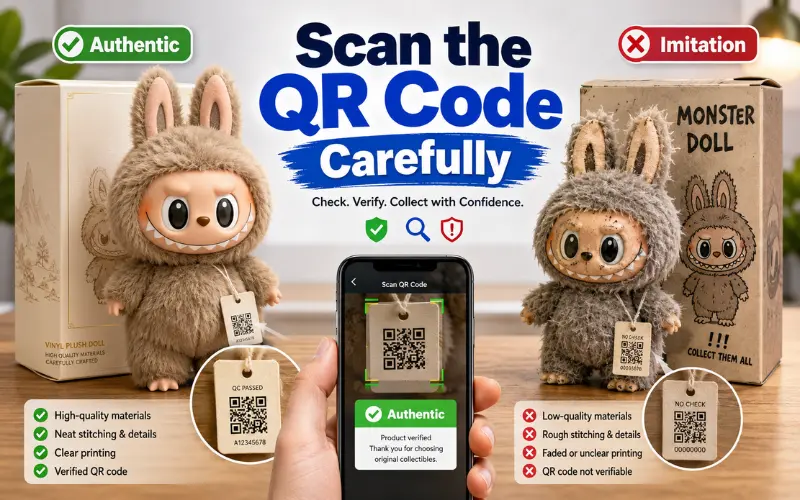
Many authentic Labubu products include anti-counterfeit features such as a holographic POP MART sticker and a scannable QR code. The CPSC says authentic POP MART Labubu dolls feature a holographic POP MART sticker, a scannable QR code that links to the official POP MART site, and newer editions may include a subtle UV stamp on one foot.
But here is the part many competitors do not explain clearly: a QR code alone does not automatically prove the doll is real. Fake products can also have QR codes. Some may lead to suspicious websites that look similar to official pages.
When you scan the QR code, pay close attention to where it takes you. It should lead to an official POP MART verification page or official POP MART domain, not a random copycat website. If the page loads strangely, redirects multiple times, asks for unusual information, or has spelling mistakes, be careful.
You should also check whether the verification code works properly. If the code is missing, already scratched, blurry, duplicated, or impossible to verify, that is a warning sign.
Count the Teeth
The tooth count is one of the simplest checks. A real Labubu is known for having nine pointed teeth. If the doll has fewer or more teeth, it is likely fake.
Still, do not stop after counting teeth. Some newer counterfeits may copy the nine-tooth design because sellers know buyers check it. A doll can have nine teeth and still be fake if the paint, shape, tags, QR code, or material quality are wrong.
Look closely at the teeth. On a real doll, the teeth should look neat and intentional. On a fake, the teeth may look uneven, badly painted, too thick, too thin, or placed outside the correct lines.
Check the Face and Paint Quality
A real Labubu face usually looks balanced and clean. The expression should match the character design, and the paint should not look rushed. The cheeks, eyes, mouth, and teeth should feel properly placed.
A Lafufu may have a face that looks slightly strange. The blush may be too strong, the skin tone may look too orange or too pale, and the eyes may look misaligned. The paint may also bleed outside the lines or appear patchy.
Small quality differences can happen even in real collectibles, but obvious mistakes are a warning sign. If the face looks very different from official photos, you should inspect the rest of the doll carefully.
Look at the Ears and Body Shape
Labubu is known for its pointed ears. On a real doll, the ears usually look balanced and match the official design. They should not look extremely wide, flat, twisted, or oddly placed.
Many Lafufus have ears that look too far apart, too upright, or poorly shaped. The head may also look too large, too narrow, or slightly distorted. The body proportions may feel different from the real version.
This is where side-by-side comparison helps. If you have official product photos, compare the doll’s ears, face width, body shape, and smile. A fake often looks close at first, but the small proportions feel wrong when you compare carefully.
Feel the Fur and Stitching
Real Labubu plush dolls usually have better fur quality and cleaner stitching. The fur should feel soft, even, and properly attached. The stitching should not look loose, messy, or weak.
A Lafufu may have fur that feels too rough, too long, too thin, or uneven. Some fake dolls may have bald spots or cheap fabric. Poor stitching is another major red flag because it can make parts loosen over time.
This is also a safety issue. Product Safety Australia warned that some fake Labubu dolls may have detachable body parts such as eyes, feet, and hands, as well as poor stitching that may create choking hazards.
Check the Hands, Feet, and Small Details
Small details often reveal the truth. Look at the hands, feet, toes, fingers, and overall finishing. A real Labubu should have clean details that match the official character design.
Fake versions may have wrong finger shapes, poorly formed toes, rough edges, or loose parts. The hands and feet may not match the original design. If parts feel weak or easy to pull off, keep the doll away from young children.
Collectors should also check the foot stamps. Authentic Labubu dolls may include a POP MART stamp, and newer versions may include UV stamp features. If the stamp is missing, poorly printed, badly placed, or spelled incorrectly, that is a warning sign.
Check the Tags and Character Card
Real Labubu dolls often come with proper tags and sometimes a character card or matching insert depending on the series. The printing should be clean, the branding should be correct, and the item inside should match the doll.
A fake may have a missing card, wrong card, blurry printing, incorrect branding, spelling mistakes, or a tag that feels cheap. These details may seem small, but they matter a lot in collectible toys.
If the doll, card, and packaging do not match the same series or color, be suspicious. Counterfeit sellers sometimes mix random accessories or use copied packaging to make the item look more believable.
Can a Lafufu Have a QR Code?
Yes, a Lafufu can have a QR code. This is why buyers should not trust the QR code blindly.
Some counterfeiters print fake QR codes on fake boxes. Others may copy real-looking stickers or create pages that imitate official verification pages. The QR code is helpful, but it is only one part of the authentication process.
A safer approach is to scan the code, check the destination carefully, verify the code if available, and then inspect the doll itself. If the QR code looks fine but the doll has poor stitching, wrong teeth, strange paint, and cheap tags, you should still be cautious.
Are Lafufu Dolls Dangerous?
Not every fake toy will break immediately, but fake Labubu dolls can carry real safety risks. The biggest concern is young children. Fake plush figures or keychains may be small enough to enter a child’s mouth, and some may break apart into small pieces.
The CPSC warned consumers not to buy fake Labubu products and to stop using them immediately because some lookalike dolls can block a child’s airway or release small choking-hazard pieces.
Product Safety Australia also warned buyers to keep counterfeit or fake Labubu dolls away from young children because of choking hazards and possible concerns about harmful chemicals such as lead.
For adult collectors, a Lafufu may seem like a harmless display item. But for homes with babies, toddlers, or small children, fake dolls should be treated carefully. If any part feels loose, damaged, or easy to detach, do not give it to a child.
Where Should You Buy a Real Labubu?
The safest option is to buy from official POP MART stores, POP MART’s official website, authorized retailers, or trusted sellers with a strong history. If you buy from resale platforms, check the seller’s reviews, photos, refund policy, and proof of authenticity.
Avoid listings that look too cheap compared with normal market prices. A very low price does not always mean fake, but it is a strong reason to check carefully. Also avoid sellers who only use stock images and refuse to send real photos.
When buying online, ask for clear photos of the box, QR code area, sticker, tag, feet, face, teeth, and full doll. A serious seller should not have a problem sharing these details.
What to Do If You Bought a Lafufu
If you think you bought a Lafufu, do not panic. First, stop using it as a child’s toy, especially if there are small children at home. Place it somewhere safe and inspect it carefully.
Take clear photos of the doll, box, tag, QR code, receipt, and seller listing. These photos can help if you request a refund or report the seller.
Contact the seller and explain the issue politely but clearly. If you bought it through a marketplace, open a dispute or refund request. If the listing claimed the doll was authentic, include your evidence.
Do not resell the doll as a real Labubu. That can mislead another buyer. If you keep it as a display item, label it honestly in your own collection and keep it away from young children.
Quick Real vs Fake Labubu Checklist
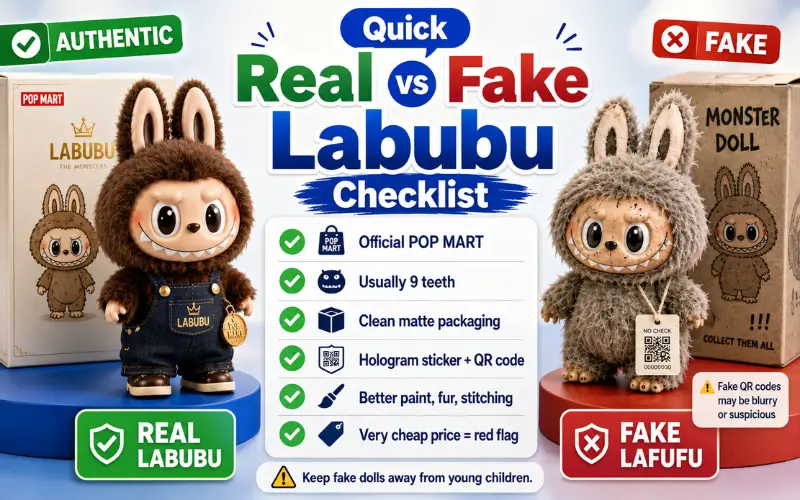
Use this checklist when you inspect a Labubu:
- Real Labubu is official POP MART; Lafufu is fake or counterfeit.
- Real Labubu usually has exactly nine teeth.
- Real packaging should look clean, matte, sharp, and professionally printed.
- Fake packaging may look too shiny, too bright, blurry, or cheaply made.
- Real Labubu may include a holographic POP MART sticker and QR code.
- A QR code should lead to an official POP MART verification page.
- Fake QR codes may be missing, blurry, copied, or lead to suspicious websites.
- Real Labubu should have cleaner paint, better fur, and stronger stitching.
- Lafufu may have wrong ears, strange face paint, loose parts, or poor tags.
- Newer authentic dolls may have UV stamp features on one foot.
- Very cheap prices and unknown sellers are major red flags.
- Fake Labubu dolls should be kept away from young children.
Labubu vs Lafufu Comparison Table
| Feature | Real Labubu | Lafufu |
|---|---|---|
| Authenticity | Official POP MART collectible | Fake or counterfeit copy |
| Value | Has collector value | Usually has little or no collector value |
| Teeth | Usually exactly 9 teeth | May have wrong tooth count or messy teeth |
| Packaging | Clean, professional, official branding | Shiny, blurry, bright, or low-quality |
| QR Code | Should link to official POP MART verification | May be missing, fake, or suspicious |
| Fur | Soft, even, better quality | Rough, uneven, too long, or cheap |
| Stitching | Cleaner and stronger | Loose, messy, or weak |
| Tags | Correct branding and details | Wrong branding, spelling errors, or missing tags |
| Safety | More likely to meet proper standards | May pose choking or material risks |
| Best For | Collectors and authentic buyers | Not recommended as authentic collectible |
FAQs
What is the difference between Labubu and Lafufu?
The difference between Labubu and Lafufu is that Labubu is the authentic POP MART collectible, while Lafufu is a nickname for fake or counterfeit Labubu dolls.
Is Lafufu a real POP MART character?
No, Lafufu is not an official POP MART character. People use the name Lafufu to describe fake Labubu dolls.
Is every cheap Labubu fake?
Not always, but a very cheap price is a major warning sign. If the price is much lower than normal, check the seller, packaging, QR code, teeth, tags, and doll quality carefully.
How many teeth does a real Labubu have?
A real Labubu is known for having exactly nine teeth. If the doll has the wrong number of teeth, it may be fake.
Can a fake Labubu have nine teeth?
Yes, some fake Labubu dolls may copy the nine-tooth design. That is why you should also check packaging, QR code, tags, paint, fur, stitching, seller history, and POP MART branding.
Can a Lafufu have a QR code?
Yes, a Lafufu can have a QR code. Some fake products use copied or suspicious QR codes. Always check where the code leads and inspect the doll as well.
Is a Lafufu dangerous?
A Lafufu can be dangerous for young children if it has small parts, poor stitching, loose eyes, detachable hands or feet, or unsafe materials. Product safety agencies have warned about choking risks linked to fake Labubu dolls.
What is the easiest way to spot a fake Labubu?
The easiest first checks are teeth count, packaging quality, QR code, POP MART branding, fur quality, stitching, and seller reputation. If several details look wrong, it is likely fake.
Should I buy Labubu from a resale seller?
You can, but you need to be careful. Buy only from trusted resale sellers with real photos, good reviews, clear return policies, and proof of authenticity.
What should I do if I bought a fake Labubu?
Stop using it as a child’s toy, take photos, contact the seller, request a refund, report the listing if needed, and do not resell it as authentic.
Conclusion
The difference between Labubu and Lafufu is more than just a name. Labubu is the real POP MART collectible, while Lafufu is a fake version that copies the original design. A real Labubu usually has better packaging, official branding, proper verification features, cleaner paint, stronger stitching, and exactly nine teeth.
A Lafufu may look similar from far away, but closer inspection often reveals problems such as cheap fur, wrong colors, strange ears, messy paint, weak stitching, fake QR codes, missing tags, or suspicious packaging.
For collectors, buying a real Labubu protects the value of your collection. For parents, avoiding Lafufu dolls can also protect children from possible choking hazards and unsafe materials. The safest approach is simple: buy from trusted sellers, verify the QR code carefully, inspect the doll closely, and never rely on one detail alone.
You May Also Like It:
Difference Between Immigrate and Emigrate
Difference Between Historic vs Historical
Difference Between Farther vs Further
