
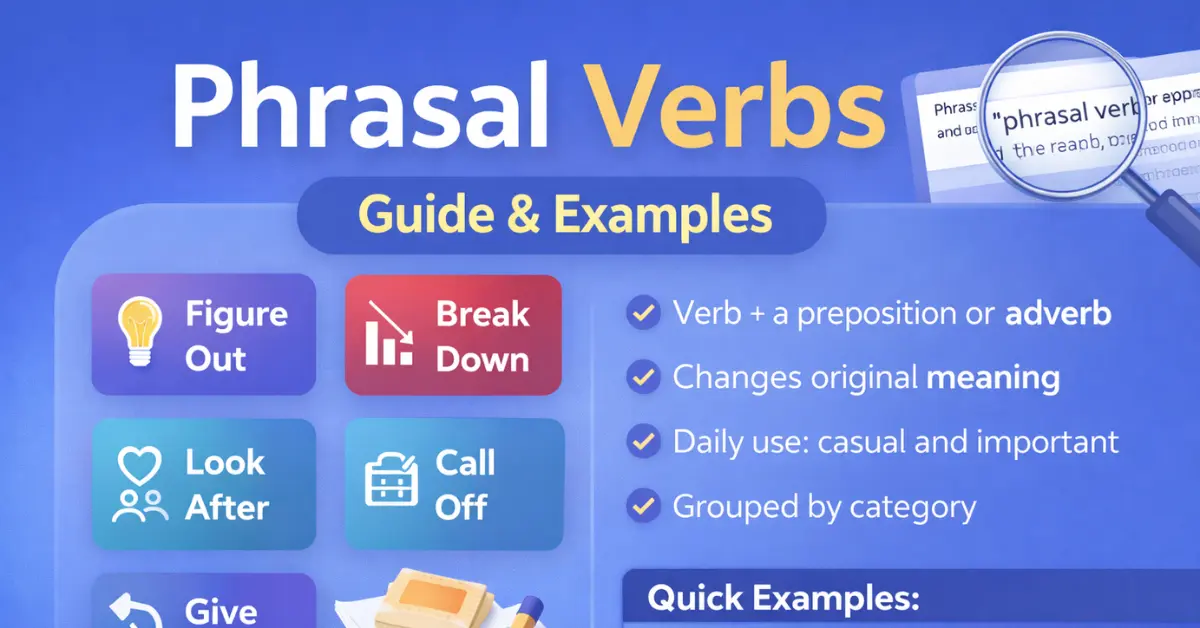
Phrasal verbs are one of the most important parts of English. If you want to speak naturally and understand native speakers, you must learn them.
But many learners struggle because phrasal verbs don’t always make sense.
This guide will help you:
Understand phrasal verbs easily
Learn the most common ones
Remember them faster using patterns
What Are Phrasal Verbs?
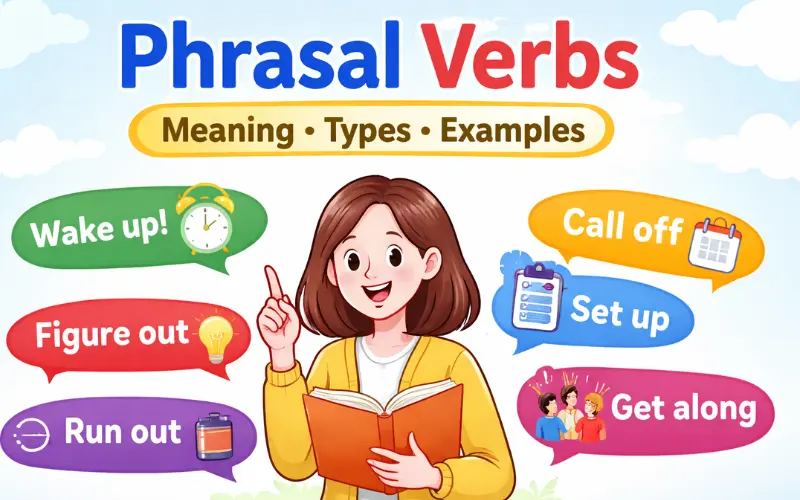
A phrasal verb is a combination of:
A verb
- a preposition or adverb
Together, they create a new meaning.
Examples:
- Give up → stop trying
- Look after → take care of
- Run out → have nothing left
The meaning is often different from the original verb.
Why Phrasal Verbs Matter
Phrasal verbs are used in:
- Daily conversations
- Movies and TV shows
- Emails and informal writing
Without them, your English may sound:
- Too formal
- Unnatural
Learning phrasal verbs helps you:
- Speak fluently
- Understand native speakers
- Communicate faster
Types of Phrasal Verbs
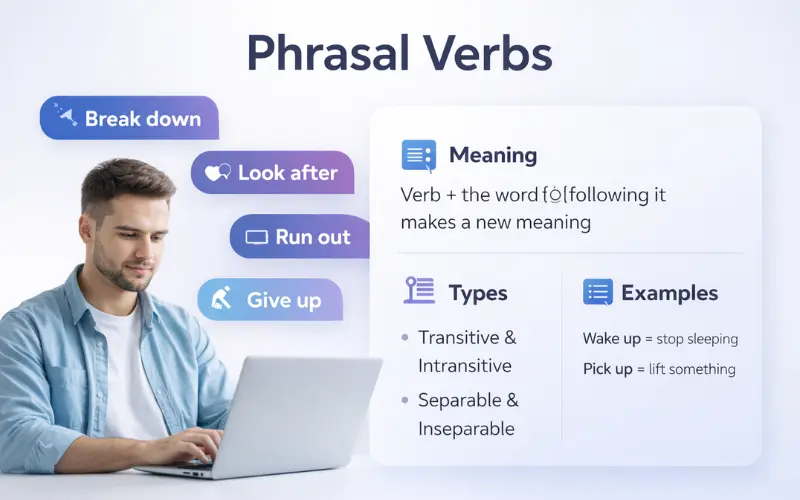
Transitive vs Intransitive
Transitive (needs object)
- Pick up the phone
Intransitive (no object)
- Wake up
Separable vs Inseparable Separable
Separable
- Turn off the light
- Turn the light off
With pronouns:
- Turn it off (correct)
Inseparable
- Look after the kids (correct)
- Look the kids after
120+ Common Phrasal Verbs (Grouped for Easy Learning)
Daily Life Phrasal Verbs
- Wake up → stop sleeping
- Get up → leave bed
- Go out → leave home
- Come back → return
- Sit down → take a seat
- Stand up → rise
Work & Study
- Carry on → continue
- Deal with → handle
- Hand in → submit
- Set up → arrange
- Take over → control
- Work out → solve
Communication
- Speak up → talk louder
- Call back → return a call
- Talk over → discuss
- Point out → highlight
Relationships & Emotions
- Break up → end relationship
- Get along → have good relationship
- Calm down → relax
- Cheer up → become happy
Problems & Thinking
- Figure out → understand
- Find out → discover
- Run into → meet unexpectedly
- Give up → stop trying
Travel & Movement
- Set off → start a journey
- Get on → enter (bus/train)
- Get off → leave vehicle
- Check in → register
- Check out → leave hotel
Money & Business
- Pay back → return money
- Cut down → reduce
- Bring in → introduce
- Take on → accept responsibility
Learn Faster with Patterns (Your Advantage)
Most articles don’t teach this—but this is the easiest way to learn.
“Up” = Completion
- Finish up → complete
- Eat up → finish food
- Clean up → complete cleaning
“Out” = No More / End
- Run out → no more left
- Wear out → become tired
- Burn out → lose energy
“On” = Continue
- Go on → continue
- Carry on → keep doing
“Off” = Stop / Separate
- Turn off → stop
- Cut off → disconnect
These patterns help you guess meanings without memorizing everything.
Real-Life Examples
Conversation 1:
A: Why didn’t you come yesterday?
B: I had to deal with some work.
Conversation 2:
A: What happened to your car?
B: It broke down on the way.
This is how phrasal verbs are used in real English.
How to Learn Phrasal Verbs Fast
Learn by Category
Group them (work, travel, daily life)
Practice Daily
Use them in speaking and writing
Watch English Content
Movies, YouTube, podcasts
Use Flashcards
Review regularly
Focus on Common Verbs First
Don’t try to learn everything at once
Quick Practice
Fill in the blanks:
I need to _____this problem.
We ran _____ of time.
She looks _____ her brother.
Answers:
1.figure out
2. out
3. after
Final Thoughts
Phrasal verbs may seem difficult, but they become easy with the right approach.
Focus on:
- Understanding meaning
- Learning patterns
- Practicing regularly
With time, you will use phrasal verbs naturally and confidently.
