
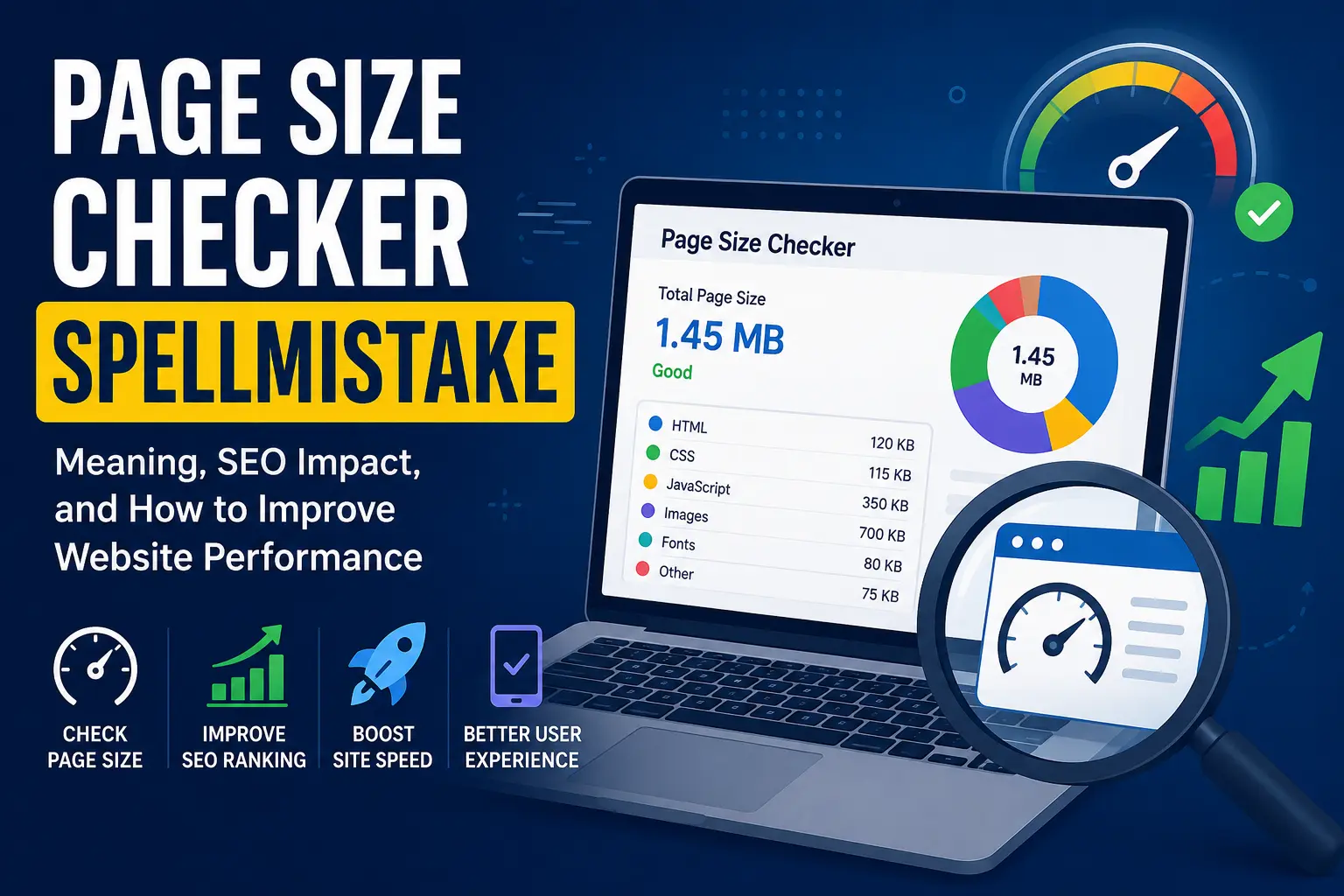
If you searched for page size checker spellmistake, you are probably trying to find a tool that checks website page size or understand why this unusual keyword appears in search results.
The simple answer is that “page size checker spellmistake” is a misspelled search term used by people looking for page size analysis tools that measure the weight of a webpage and help improve website performance. Even though the phrase contains a spelling mistake, the search intent is clear: users want to know how large a webpage is and whether its size is affecting speed, SEO, and user experience.
This guide explains everything you need to know about page size checkers, why page size matters, how spelling mistakes affect search behavior, and how to optimize your website for better rankings and faster loading times.
What Does “Page Size Checker Spellmistake” Mean?
The phrase page size checker spellmistake combines two separate concepts:
- Page Size Checker – A tool used to measure the total size of a webpage.
- Spellmistake – A typing error or misspelling made while searching online.
Many users type search queries quickly and accidentally enter phrases such as:
- page size checher
- page size cheker
- page size chaker
- page sizechecker
- page size checker spellmistake
Modern search engines usually understand these mistakes and still display relevant results.
The important thing is that the user is looking for a tool that checks webpage size and performance.
What Is a Page Size Checker?
A page size checker is a website performance tool that calculates the total amount of data loaded when someone visits a webpage.
The tool analyzes all resources downloaded by the browser, including:
- HTML files
- CSS stylesheets
- JavaScript files
- Images
- Fonts
- Videos
- Third-party scripts
- Tracking codes
The result is usually displayed in:
- Kilobytes (KB)
- Megabytes (MB)
A page size checker helps website owners understand whether their pages are lightweight or unnecessarily heavy.
Why Page Size Matters for SEO
Website page size directly affects loading speed.
A larger page generally requires more time and bandwidth to load.
This can create several SEO problems:
Slower Page Loading
Large files take longer to download.
Visitors expect websites to load almost instantly.
If a page takes too long, users often leave before the content appears.
Higher Bounce Rate
Slow pages increase bounce rates because visitors become frustrated.
A high bounce rate often indicates poor user experience.
Reduced Mobile Performance
Many users browse on mobile devices using slower internet connections.
Heavy webpages create a poor experience for mobile visitors.
Poor Core Web Vitals Scores
Google uses Core Web Vitals to measure page experience.
Large pages often struggle with:
- Largest Contentful Paint (LCP)
- Interaction to Next Paint (INP)
- Cumulative Layout Shift (CLS)
Lower Search Rankings
Google wants to rank pages that provide a positive user experience.
Fast-loading pages usually perform better in search results than slow-loading alternatives.
What Does a Page Size Checker Measure?
A professional page size checker provides much more than a simple file size report.
HTML Size
HTML forms the foundation of a webpage.
Excessive code can increase page weight and slow rendering.
Recommended Target:
Under 100 KB
CSS Size
CSS controls website styling and design.
Unused CSS files often increase page size unnecessarily.
Recommended Target:
Under 100 KB combined
JavaScript Size
JavaScript adds interactivity and dynamic functionality.
Large scripts are one of the most common causes of slow websites.
Recommended Target:
Under 300 KB when possible
Image Size
Images typically account for the largest portion of page weight.
Unoptimized images can dramatically slow down websites.
Recommended Target:
Under 200 KB per image
Font Files
Custom fonts improve branding but can increase load times.
Using too many font families creates unnecessary requests.
Recommended Target:
Two or three font families maximum
Third-Party Scripts
These include:
- Analytics tools
- Advertising scripts
- Chat widgets
- Social sharing buttons
Third-party resources frequently cause performance issues.
Page Size vs Page Weight: What’s the Difference?
Many people use these terms interchangeably.
However, there is a slight difference.
| Metric | Meaning |
|---|---|
| Page Size | Size of individual resources such as HTML, CSS, and JS |
| Page Weight | Total size of everything loaded by a webpage |
For SEO purposes, page weight is usually the more important metric.
Ideal Website Page Size in 2026
While there is no official Google limit, most performance experts recommend the following targets:
| Website Type | Recommended Page Weight |
|---|---|
| Landing Page | Under 1 MB |
| Blog Post | Under 2 MB |
| Business Website | Under 2 MB |
| Ecommerce Product Page | Under 3 MB |
| News Website | Under 2.5 MB |
For mobile users, keeping page weight below 1 MB is ideal.
Why Do People Search for “Page Size Checker Spellmistake”?
There are several reasons.
Fast Typing
Many users simply type too quickly.
Mobile Keyboards
Small keyboards often lead to accidental errors.
Voice Search
Voice assistants sometimes interpret words incorrectly.
Non-Native English Speakers
People searching in a second language frequently make spelling mistakes.
Autocorrect Issues
Autocorrect occasionally changes intended words into something unexpected.
Search engines understand these situations and focus on user intent rather than perfect spelling.
Best Free Page Size Checker Tools
Here are some of the most reliable tools available today.
Google PageSpeed Insights
Best for:
- Core Web Vitals
- Mobile performance
- Google recommendations
Advantages
- Free
- Trusted by Google
- Detailed optimization suggestions
GTmetrix
Best for:
- Page weight analysis
- Performance monitoring
- Waterfall reports
Advantages
- Detailed reports
- Historical tracking
- Easy-to-read interface
WebPageTest
Best for:
- Advanced performance testing
- Technical analysis
Advantages
- Deep diagnostics
- Multiple test locations
Pingdom Website Speed Test
Best for:
- Quick speed checks
- Performance snapshots
Advantages
- Beginner-friendly
- Fast reports
DebugBear
Best for:
- Page weight breakdown
- Resource analysis
- Performance monitoring
Advantages
- Excellent visualization
- Detailed file inspection
How to Reduce Website Page Size
If a page size checker reveals performance problems, use these optimization methods.
Compress Images
Images often contribute over 50% of total page weight.
Use:
- WebP
- AVIF
- Image compression tools
Minify CSS and JavaScript
Remove:
- Unnecessary spaces
- Comments
- Duplicate code
This can significantly reduce file sizes.
Enable GZIP or Brotli Compression
Compression reduces transferred file size before delivery to the browser.
Benefits include:
- Faster downloads
- Reduced bandwidth usage
Use Lazy Loading
Load images only when users scroll to them.
Benefits:
- Faster initial load times
- Lower page weight
Remove Unused Plugins
WordPress websites often become slow due to excessive plugins.
Delete anything that is no longer required.
Use a Content Delivery Network (CDN)
A CDN stores website assets on servers worldwide.
This reduces loading time for visitors in different locations.
WordPress Optimization Tips
Since WordPress powers a large percentage of websites, it deserves special attention.
Recommended Plugins
- LiteSpeed Cache
- WP Rocket
- Perfmatters
- FlyingPress
Image Optimization Plugins
- ShortPixel
- Smush
- Imagify
Lightweight Themes
- GeneratePress
- Astra
- Kadence
These themes help keep page size under control.
Common Website Elements That Increase Page Weight
Many website owners overlook these factors.
Large Background Videos
Videos can add several megabytes to a page.
Too Many Fonts
Every font requires additional downloads.
Heavy Sliders
Homepage sliders often contribute significant weight.
Embedded Social Feeds
Social widgets frequently load large scripts.
Excessive Ads
Advertising networks can dramatically increase page size.
How Page Size Affects User Experience
Page speed is no longer just a technical metric.
It directly influences how visitors interact with your website.
A faster website typically results in:
- More page views
- Longer session duration
- Higher conversions
- Better engagement
- Improved customer satisfaction
This is why page size optimization should be a regular part of website maintenance.
Frequently Asked Questions
What is page size checker spellmistake?
It is a misspelled search query used by people looking for page size checking tools and website performance analysis resources.
Does a spelling mistake affect Google search results?
Usually not. Google can understand most common misspellings and show relevant results.
What page size is considered too large?
Pages above 3 MB often experience performance challenges, especially on mobile devices.
Can page size affect SEO?
Yes. Larger pages often load slower, which can negatively affect user experience and search visibility.
How often should I check page size?
It is a good practice to check page size monthly or whenever major website changes are made.
Final Thoughts
The keyword page size checker spellmistake may appear unusual, but the intent behind it is straightforward. Users are looking for ways to measure webpage size, improve website speed, and optimize performance.
A page size checker helps identify heavy resources such as images, JavaScript files, CSS stylesheets, fonts, and third-party scripts. By optimizing these elements, website owners can improve loading speed, enhance user experience, and strengthen SEO performance.
Whether you manage a personal blog, business website, ecommerce store, or enterprise platform, regularly monitoring page size is one of the simplest and most effective ways to keep your website fast, efficient, and competitive in search results.
